An experience that brings together literary readings, poems, talks, and the soundscapes of Sacred Nature Waves.
Some stories begin on the page and continue within the reader. A character, a landscape, or a question can stay with us long after we close a book — especially when that story touches on something we also seek in our own lives.
Manu: Between Two Worlds, by Rodolfo Andrade, grows out of this meeting of adventure, belonging, and connection with nature. The novel follows Manu, a 17-year-old from São Paulo, on a journey that brings urban life closer to the world of the forest, navigating environmental conflicts, cultural encounters, and personal discoveries.
Around this narrative, Rodolfo develops an approach that expands the reading experience: bringing literature, poems, live music, talks, and the sounds of different instruments together in a single gathering. Alongside Luiz Nila, in Sacred Nature Waves, the author brings audiences an experience in which words and sound create pathways for imagining, feeling, and reflecting.
A story about the worlds we inhabit
In Manu: Between Two Worlds, the passage between city and forest also makes room for questions about identity and choices. The growing connection between climbers and Indigenous people, the threat of environmental exploitation, and the bonds formed throughout the adventure set in motion questions that reach beyond fiction.
What are we willing to protect? What relationship do we build with the places we pass through? How do our decisions affect other forms of life?
Manu's journey invites readers to explore these questions through the story. Nature plays a part in the events and encounters that transform the character, becoming an essential part of what he learns to recognize and value.
It is a read for those who enjoy adventure and also for those who wish to rediscover their curiosity about the world.
From the page to a live experience
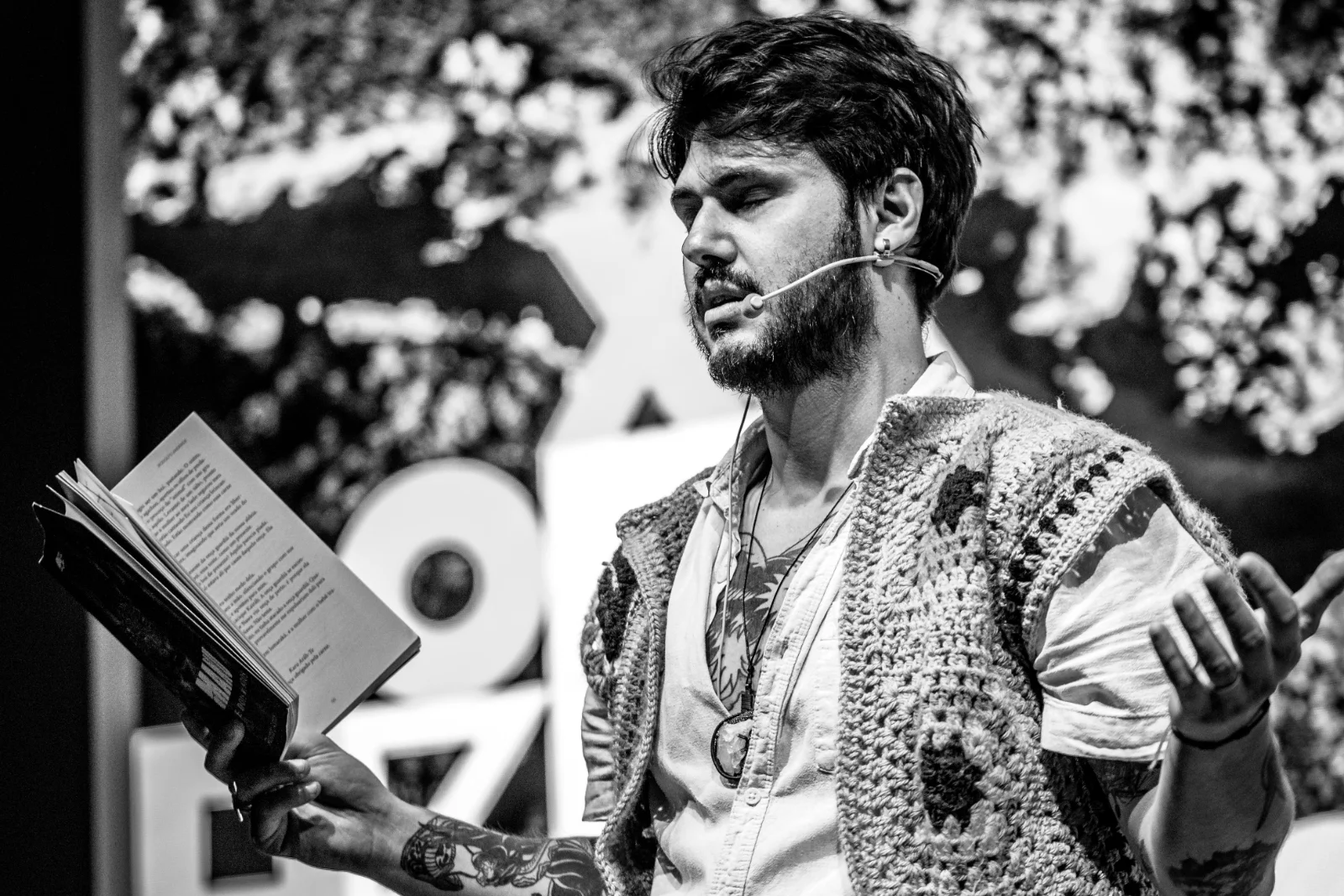
The artistic concept starts with the book and takes on new forms in the encounter with the audience. Selected passages are read by the author himself and interwoven with poems, reflections, and musical interludes.
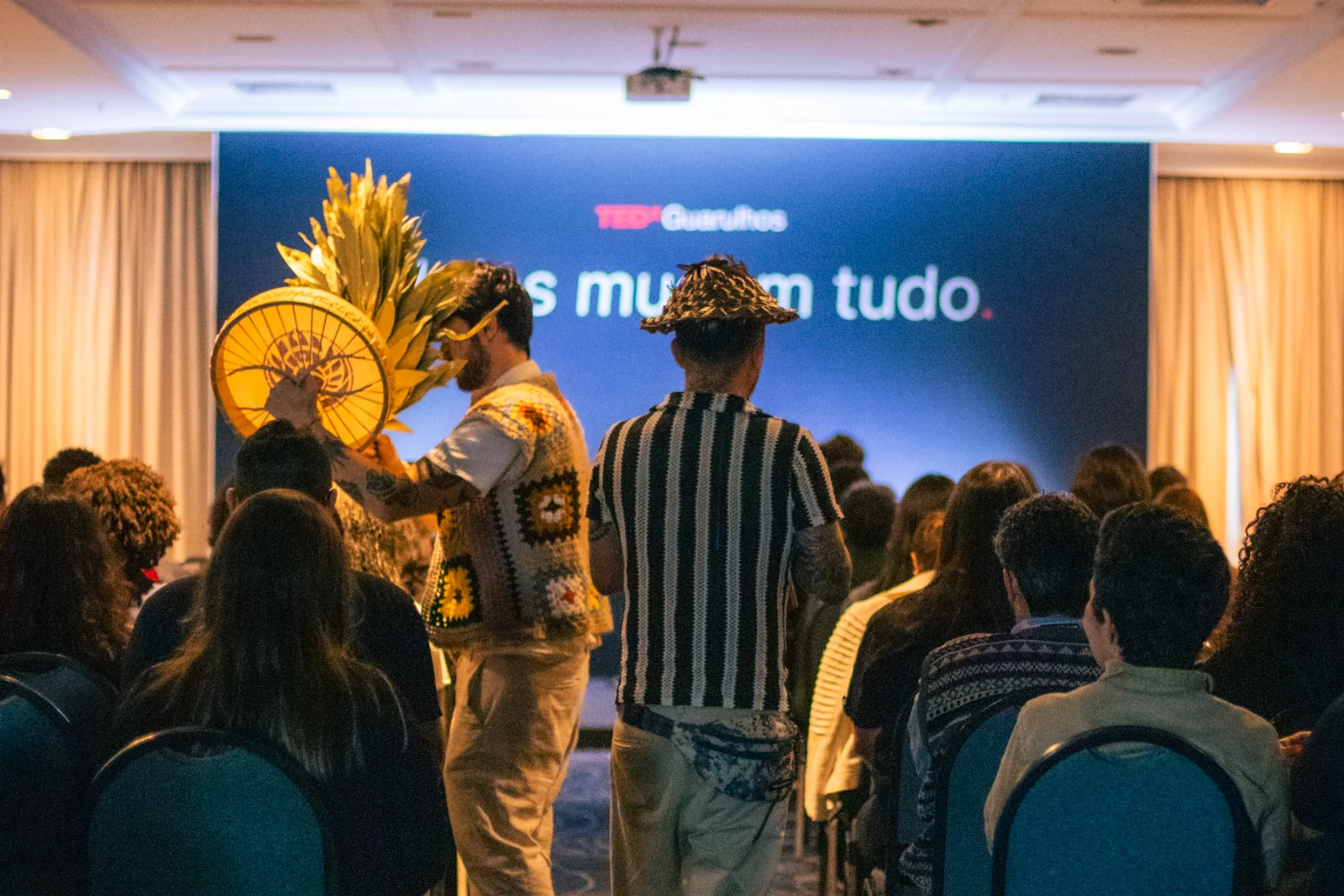
A passage may be accompanied by the breath of a flute. A pause in the reading may make room for the resonance of a bowl or for a soundscape created live. The pulse of a drum may accompany a shift in the narrative's atmosphere.
The music creates space for each person to form their own images. Between words and silences, the audience is invited to imagine the forest, recognize its movements, and notice the connections between the story and their own experience.
For those who already know the book, the gathering offers a new way to engage with the work. For those who have not yet read it, it may be the beginning of that discovery.
Poems, literary readings, and music in dialogue
Reading aloud reveals aspects that often go unnoticed on the page: the breath of a sentence, the rhythm of a passage, the intention of a word.
The poems add another way to engage. They can distill an image or sustain a question, offering time for the audience to stay with what they have just heard.
In this dialogue, music has a narrative role. It can accompany, respond, create tension, or open an interval of contemplation. The concept combines the author's presence with the expressive freedom of a musical performance, preserving space for listening.
Ancestral sounds, ethnic instruments, and contemporary creation
The work of Sacred Nature Waves brings together instruments such as flutes, didgeridoo, drums, rattles, bowls, gong, and kalimba, depending on the lineup and format of each performance.
These sounds can meet synthesizers, loops, and effects, creating musical landscapes that move between organic textures and electronic possibilities. Sounds reminiscent of wind, water, movement, and depth enter into dialogue with the themes of the work.
Ancestral references and instruments of different origins are presented with attention to their contexts. Each tradition has its own history and meaning; understanding these differences enriches the experience and helps build a respectful relationship with the cultures that inspire the creation.
Why talk about nature amid our daily routines?
In everyday life, it is easy to move through the days paying more attention to commitments than to the places where we live. Our attention becomes divided, breaks grow shorter, and even moments of rest can become another task.
Literature offers an opportunity to stay with a story. Music offers time to listen. Nature, present in the book's themes and in the images evoked by the performance, invites us to observe what continues to happen around us: the changing light, the movement of leaves, the path of water, the existence of other beings.
This connection can begin with accessible actions: walking in a green space, caring for a plant, getting to know the area where you live better, or devoting a few minutes to observation.
The idea of a lighter, fuller life appears here as a personal invitation: to find space for curiosity, connections, rest, and choices aligned with what matters. Each person builds this relationship in their own way.
Connecting also means caring
An encounter with nature gains depth when it sparks interest in its preservation. Getting to know a place, its species, and the people who inhabit it can transform the way we relate to it.
This is one of the threads running through Manu: Between Two Worlds. The adventure opens the way for conversations about belonging, responsibility, and coexistence, bringing imagination closer to issues present in our shared lives.
During the talks and conversations, Rodolfo shares the themes of his work and his relationship with life outdoors. The audience has space to ask questions, exchange perspectives, and relate the narrative to their own experiences.
A gathering for schools, companies, retreats, and cultural spaces
The concept can be adapted to the age group, setting, and goals of each organization. Possibilities include:
Meet the author: an introduction to the book, readings of passages, a conversation, and a book signing.
Literature and live music: a performance that interweaves narrative, poems, and soundscapes.
Talk with a musical experience: reflections on nature, creativity, belonging, and choices, accompanied by Sacred Nature Waves.
Retreat activity: reading and music integrated into the program, with moments for contemplation and exchange.
Project with copies of the book: booking the experience together with purchasing books for participants, teams, or invited readers.
The duration, musical lineup, technical resources, and number of copies are defined in the proposal.
The gathering ends. The reading continues.
Receiving the book along with the experience allows this connection to continue after the event. A passage heard live can be revisited at leisure. A question raised during the conversation may take on a different meaning as the reading unfolds.
In schools, the work can open up possibilities for discussion and creation. In companies, it can be part of a cultural initiative and offer a gift with a lasting life. At retreats and literary gatherings, it becomes a keepsake that stays with the participant beyond that day.
The copy can also be handed over at a book signing, creating a moment of closeness between author and readers.
Bring Manu and Sacred Nature Waves to your event
Manu: Between Two Worlds and Sacred Nature Waves come together in a concept that values imagination, listening, and the relationship with nature.
It is an opportunity to discover a literary work through its author's voice and a musical creation that expands its atmospheres — and to take that story home, to continue the journey at your own pace.
To purchase the book or request a proposal including a talk, literary reading, live music, and copies for the audience, get in touch through the website https://book-talk-booster.lovable.app